
 中文
中文How to Choose a Ball Valve Ball? Three Standards Explained
In the industrial valve market, the quality of ball valve balls varies greatly. How to choose a product that combines performance and reliability? This article reveals the standards for ball valve balls from three dimensions: material, manufacturing process, and certification.
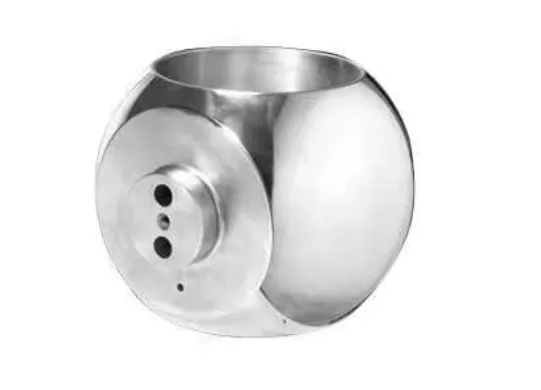
Standard 1: Material Adaptability - Adapting to Local Conditions
Different industrial applications require vastly different ball materials. For example, in high-concentration seawater environments, 316 stainless steel, due to its high silver content, has significantly higher resistance than Qualcomm 10 stainless steel. In high-end applications, high-crystalline alloy balls can withstand temperatures above 60°C, preventing or eliminating defects. Furthermore, food-grade balls...
Standard 2: Micron-Level Machining Precision for a Safer Sealing Experience
The roundness and surface roughness of the ball directly affect its sealing performance. The balls are pre-machined using CNC machining to ensure a roundness error of 0.05mm and a surface roughness Ra of 0.21μm. Some manufacturers also use online inspection equipment to conduct 100% inspection on each new ball, preventing defective products from entering the market.
Standard Three: Certification System - Endorsement, Quality Assurance
International certification is the ultimate passport for ball quality. A6G0 certified products comply with the American Petroleum Institute standard commonly used to describe: 1501584. This certification currently ensures environmental compliance for low-risk imported products. In addition, CE certification, ATE0 certification, etc., correspond to government market and hazardous environment requirements, respectively. Multiple Options!
Application Scenarios Extended: From Extreme Conditions to Green Energy
In deep-sea drilling platforms, high-pressure spheres can withstand pressures exceeding 10 MPa. In the field of energy transportation, spheres are designed to withstand oxygen supply, ensuring long-term stability in high-pressure environments. In wastewater treatment plants, spheres effectively resist chemical oxygen demand, reducing maintenance frequency. With the rise of new energy industries, whether in traditional industries or emerging fields, the quality of ball valve spheres remains the cornerstone of safe system operation. Through rigorous material selection, precise process control, and certification, companies can provide users with more efficient and economical fluid control solutions.
