
 中文
中文
Valve Balls
Specialize in stainless steel floating balls, trunnion balls, hollow balls and hard-sealed balls. We offer straight-through, elbow, tee, V-type, W-type, hemispherical, orbit and long-handle spherical products, as well as customized non-standard balls in special shapes and materials per drawings and specifications.

Solid Ball
A solid ball is an integral, one-piece solid spherical component used as the core closing and regulating part in floating ball valves and trunnion mounted ball valves. It is machined from a whole solid bar or forging without hollow cavity inside, featuring high mechanical strength, excellent pressure resistance, rigid structure and stable performance.
Advantages
High rigidity and pressure resistance, no deformation under high pressure and high temperature working conditions.
No hidden leakage risk, stable sealing performance and long service life.
Good wear and scour resistance, suitable for frequent opening and closing.
Widely applicable to high pressure, high temperature and harsh medium working conditions.
Advantages
High rigidity and pressure resistance, no deformation under high pressure and high temperature working conditions.
No hidden leakage risk, stable sealing performance and long service life.
Good wear and scour resistance, suitable for frequent opening and closing.
Widely applicable to high pressure, high temperature and harsh medium working conditions.
View Details

L-Port Ball
L‑port ball is the core component of a 3‑way ball valve, featuring an L‑shaped 90° flow path inside the sphere. It is designed for 2‑way flow diversion and is also called a 90° ball or diverter ball.
Structure & Working Principle
Solid/hollow sphere with an L‑shaped orthogonal bore, matching three body ports (A, B, C; A is common).
90° rotation switches flow: A→B (straight) or A→C (divert); cannot connect all three ports simultaneously.
When closed, the solid sphere seals the third port for bubble‑tight shutoff.
Materials & Precision
Materials: 304/316L/443 stainless steel, carbon steel WCB, alloy steel F6a, Inconel 625; forged or cast.
Precision: Roundness ≤ 0.01–0.03mm, surface finish Ra ≤ 0.4μm (mirror‑ground sealing surface).
Surface treatment: Hard chrome plating, nitriding, Stellite hardfacing for wear/corrosion resistance.
Key Advantages (vs T‑port ball)
✅ Simple function: 2‑way diversion only; simpler structure, lower torque, lower cost.
✅ Low pressure drop: Smooth L‑bore minimizes flow resistance, ideal for high flow rates.
✅ Reliable sealing: Two‑port seal design with no central flow path, reducing leakage risk.
✅ Compact size: More compact than T‑port for the same size, suitable for space‑constrained installations.
Structure & Working Principle
Solid/hollow sphere with an L‑shaped orthogonal bore, matching three body ports (A, B, C; A is common).
90° rotation switches flow: A→B (straight) or A→C (divert); cannot connect all three ports simultaneously.
When closed, the solid sphere seals the third port for bubble‑tight shutoff.
Materials & Precision
Materials: 304/316L/443 stainless steel, carbon steel WCB, alloy steel F6a, Inconel 625; forged or cast.
Precision: Roundness ≤ 0.01–0.03mm, surface finish Ra ≤ 0.4μm (mirror‑ground sealing surface).
Surface treatment: Hard chrome plating, nitriding, Stellite hardfacing for wear/corrosion resistance.
Key Advantages (vs T‑port ball)
✅ Simple function: 2‑way diversion only; simpler structure, lower torque, lower cost.
✅ Low pressure drop: Smooth L‑bore minimizes flow resistance, ideal for high flow rates.
✅ Reliable sealing: Two‑port seal design with no central flow path, reducing leakage risk.
✅ Compact size: More compact than T‑port for the same size, suitable for space‑constrained installations.
View Details

Hard Seal Ball
The hard seal valve ball is the core opening and closing part of ball valves. It adopts metal-to-metal hard sealing structure without any soft sealing materials such as rubber or plastic. The tight sealing is realized by precision lapping between the ball and seat sealing surfaces
Key Features
High temperature resistance: Suitable for high temperature steam, thermal oil and high-temperature process medium, working temperature over 400℃.
High pressure resistance: No deformation under high pressure, keeping stable sealing performance.
Wear & particle resistance: Ideal for medium with dust, sediment, slurry and solid particles.
Long service life: Metal hard seal structure, no aging or easy failure.
Fire safe design: No plastic parts, maintaining sealing performance under fire conditions.
Key Features
High temperature resistance: Suitable for high temperature steam, thermal oil and high-temperature process medium, working temperature over 400℃.
High pressure resistance: No deformation under high pressure, keeping stable sealing performance.
Wear & particle resistance: Ideal for medium with dust, sediment, slurry and solid particles.
Long service life: Metal hard seal structure, no aging or easy failure.
Fire safe design: No plastic parts, maintaining sealing performance under fire conditions.
View Details
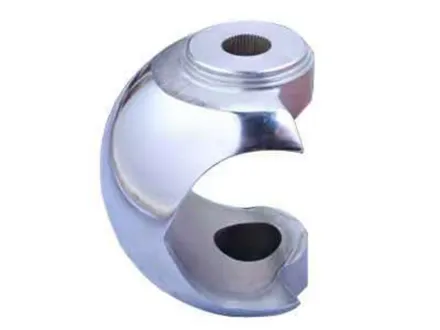
Hemisphere
Half Sphere Valve Ball / Eccentric Half Ball
The eccentric half ball is the core component of eccentric half ball valve. It is designed with a half spherical structure and eccentric offset, different from the full-port round ball.
Structure & Working Principle
Adopts eccentric structure; the rotation center is offset from the sealing center of the ball.
The half sphere separates from the valve seat automatically during opening and closing, no friction, no scraping on the sealing surface.
Self-tightening sealing performance: the higher the medium pressure, the tighter the sealing contact.
Straight-through flow channel with minimal pressure loss, large flow capacity close to full pipe diameter.
Material & Processing
Available in 304, 316L, 2507 duplex steel, carbon steel and alloy steel.
Made by forging or precision casting. The sealing surface is precision lapped, optional with Stellite hardfacing and nitriding treatment. Both metal hard seal and soft seal types are available.
The eccentric half ball is the core component of eccentric half ball valve. It is designed with a half spherical structure and eccentric offset, different from the full-port round ball.
Structure & Working Principle
Adopts eccentric structure; the rotation center is offset from the sealing center of the ball.
The half sphere separates from the valve seat automatically during opening and closing, no friction, no scraping on the sealing surface.
Self-tightening sealing performance: the higher the medium pressure, the tighter the sealing contact.
Straight-through flow channel with minimal pressure loss, large flow capacity close to full pipe diameter.
Material & Processing
Available in 304, 316L, 2507 duplex steel, carbon steel and alloy steel.
Made by forging or precision casting. The sealing surface is precision lapped, optional with Stellite hardfacing and nitriding treatment. Both metal hard seal and soft seal types are available.
View Details

Trunnion Ball
Trunnion Ball / Fixed Ball
Trunnion mounted ball is also called fixed ball. It has integral top and bottom trunnion shafts, fixed in the valve body without floating. The ball only rotates in place and does not shift under medium pressure, specially designed for high pressure and large bore ball valves.
Structure Features
Integrated upper and lower trunnion shafts support the ball firmly in the valve body.
The ball rotates only without axial movement.
Sealing relies on floating seat compensation to fit the ball surface tightly.
Mostly designed as solid forged ball with high rigidity and anti-deformation performance.
Trunnion mounted ball is also called fixed ball. It has integral top and bottom trunnion shafts, fixed in the valve body without floating. The ball only rotates in place and does not shift under medium pressure, specially designed for high pressure and large bore ball valves.
Structure Features
Integrated upper and lower trunnion shafts support the ball firmly in the valve body.
The ball rotates only without axial movement.
Sealing relies on floating seat compensation to fit the ball surface tightly.
Mostly designed as solid forged ball with high rigidity and anti-deformation performance.
View Details

Stem Ball
Stem Ball for Ball Valve
Size: NPS 1-4 (DN25-100)
Pressure Rating: Class 150~2500(PN16~420)
Base Material: ASTM A105, A350 LF2, A182 F304, A182 F316, A182 F6A, A182 F51, A182 F53, A182 F55, A564 630(17-
4PH), Monel, Inconel.Coatings: ENP, Chrome Plating, Tungsten Carbide, Chrome Carbide, Stellite, Inconel, Special.Support Type: Axle Sleeve
Drive: Straight Slot
Roundness: 0.01-0.02
Roughness: Ra0.2-Ra0.4
Coaxiality: 0.05
Packaging Detail: wooden cases; pallet; containers
Used: large and medium oil, gas, water conservancy, pharmaceuticals,Chemical, heating equipment industryWe can also produce according to customer's size.
Size: NPS 1-4 (DN25-100)
Pressure Rating: Class 150~2500(PN16~420)
Base Material: ASTM A105, A350 LF2, A182 F304, A182 F316, A182 F6A, A182 F51, A182 F53, A182 F55, A564 630(17-
4PH), Monel, Inconel.Coatings: ENP, Chrome Plating, Tungsten Carbide, Chrome Carbide, Stellite, Inconel, Special.Support Type: Axle Sleeve
Drive: Straight Slot
Roundness: 0.01-0.02
Roughness: Ra0.2-Ra0.4
Coaxiality: 0.05
Packaging Detail: wooden cases; pallet; containers
Used: large and medium oil, gas, water conservancy, pharmaceuticals,Chemical, heating equipment industryWe can also produce according to customer's size.
View Details

Floating Ball
Floating Ball Valve Ball
A floating ball is the most common ball structure for ball valves. Without top and bottom trunnion shafts, the ball can float axially inside the valve body. Under medium pressure, the ball is pushed against the downstream valve seat to achieve tight sealing by self-compression.
Structure & Working Principle
The ball is not fixed and can move slightly back and forth.
Medium pressure pushes the ball toward the low-pressure side seat for reliable sealing.
Simple structure with fewer components, easy assembly.
Available in straight port, L-port and T-port for general small and medium bore valves.
A floating ball is the most common ball structure for ball valves. Without top and bottom trunnion shafts, the ball can float axially inside the valve body. Under medium pressure, the ball is pushed against the downstream valve seat to achieve tight sealing by self-compression.
Structure & Working Principle
The ball is not fixed and can move slightly back and forth.
Medium pressure pushes the ball toward the low-pressure side seat for reliable sealing.
Simple structure with fewer components, easy assembly.
Available in straight port, L-port and T-port for general small and medium bore valves.
View Details
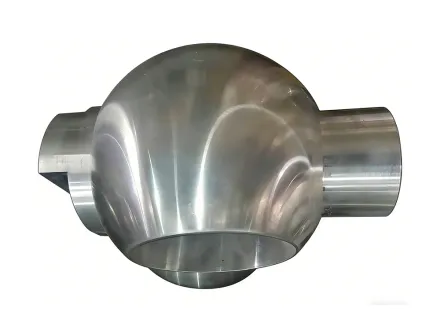
Inclined Ball
Bevel Port Valve Ball / Angled Cut Valve Ball
Bevel port valve ball, also named angled cut valve ball, is designed with inclined bevel cut at the port of ball flow passage, different from standard straight flat port ball. It is widely used in regulating ball valves, cut-off ball valves, eccentric ball valves and drain ball valves.
Structure & Working Principle
The flow port is machined into an inclined bevel surface instead of vertical flat port.
By rotating the ball, the bevel changes the flow area continuously to realize throttling, flow regulation and full shutoff.
The bevel sealing surface fits tightly with valve seat, ensuring smooth opening/closing and reducing medium impact and erosion.
Bevel port valve ball, also named angled cut valve ball, is designed with inclined bevel cut at the port of ball flow passage, different from standard straight flat port ball. It is widely used in regulating ball valves, cut-off ball valves, eccentric ball valves and drain ball valves.
Structure & Working Principle
The flow port is machined into an inclined bevel surface instead of vertical flat port.
By rotating the ball, the bevel changes the flow area continuously to realize throttling, flow regulation and full shutoff.
The bevel sealing surface fits tightly with valve seat, ensuring smooth opening/closing and reducing medium impact and erosion.
View Details

V-Port Ball
V-Port Ball
V-port ball is the core component of V-port control ball valve. It features a V-shaped notch flow passage on the ball surface, integrating functions of throttling, flow regulation and tight shutoff.
Structure & Working Principle
Designed with a precise V-cut notch instead of straight round bore.
The V-shaped opening changes linearly with rotation angle, realizing accurate flow regulation.
When fully closed, the V-edge fits closely with the valve seat for excellent tight shutoff performance.
Built-in shearing function: the V-notch and seat can cut fiber, slurry and solid particles to avoid jamming and blockage.
V-port ball is the core component of V-port control ball valve. It features a V-shaped notch flow passage on the ball surface, integrating functions of throttling, flow regulation and tight shutoff.
Structure & Working Principle
Designed with a precise V-cut notch instead of straight round bore.
The V-shaped opening changes linearly with rotation angle, realizing accurate flow regulation.
When fully closed, the V-edge fits closely with the valve seat for excellent tight shutoff performance.
Built-in shearing function: the V-notch and seat can cut fiber, slurry and solid particles to avoid jamming and blockage.
View Details

Three-Way Ball
As a vital component within the valve industry, the three-way ball valve possesses the following distinctive characteristics:
**Versatility:** Capable of simultaneously distributing, diverting, or mixing media across three pipelines—including both converging and diverging operations—making it suitable for complex fluid control systems.
**Compact Structure:** Featuring a sophisticated design that occupies minimal space, it facilitates installation in confined areas and is particularly well-suited for dense piping layouts.
**Superior Sealing Performance:** The precise fit between the ball and the valve seat ensures a high degree of leak-tightness in both open and closed positions, effectively preventing leakage.
**Ease of Operation:** A simple 90-degree rotation is all that is required to fully open or close the valve; this simple and rapid operation reduces both operational time and labor costs.
**Low Flow Resistance:** The streamlined design minimizes resistance as media flows through the valve, thereby enhancing flow capacity and reducing energy consumption.
**Broad Applicability:** Suitable for a wide range of media—including water, oil, gas, and steam—it is extensively utilized across industries such as petroleum, chemical processing, natural gas, food processing, and pharmaceuticals.
**Long Service Life:** Constructed from corrosion-resistant materials, such as stainless steel, the valve exhibits enhanced durability and an extended operational lifespan.
**Ease of Maintenance:** The design of the sealing rings facilitates easy removal and replacement, thereby simplifying routine maintenance procedures.
**Automation Compatibility:** Capable of integration with pneumatic or electric actuators, enabling remote control and automated operation to boost overall system efficiency.
Collectively, these characteristics establish the three-way ball valve as an indispensable control component across numerous industrial sectors, enabling the efficient and reliable management of fluid direction and flow rates.
**Versatility:** Capable of simultaneously distributing, diverting, or mixing media across three pipelines—including both converging and diverging operations—making it suitable for complex fluid control systems.
**Compact Structure:** Featuring a sophisticated design that occupies minimal space, it facilitates installation in confined areas and is particularly well-suited for dense piping layouts.
**Superior Sealing Performance:** The precise fit between the ball and the valve seat ensures a high degree of leak-tightness in both open and closed positions, effectively preventing leakage.
**Ease of Operation:** A simple 90-degree rotation is all that is required to fully open or close the valve; this simple and rapid operation reduces both operational time and labor costs.
**Low Flow Resistance:** The streamlined design minimizes resistance as media flows through the valve, thereby enhancing flow capacity and reducing energy consumption.
**Broad Applicability:** Suitable for a wide range of media—including water, oil, gas, and steam—it is extensively utilized across industries such as petroleum, chemical processing, natural gas, food processing, and pharmaceuticals.
**Long Service Life:** Constructed from corrosion-resistant materials, such as stainless steel, the valve exhibits enhanced durability and an extended operational lifespan.
**Ease of Maintenance:** The design of the sealing rings facilitates easy removal and replacement, thereby simplifying routine maintenance procedures.
**Automation Compatibility:** Capable of integration with pneumatic or electric actuators, enabling remote control and automated operation to boost overall system efficiency.
Collectively, these characteristics establish the three-way ball valve as an indispensable control component across numerous industrial sectors, enabling the efficient and reliable management of fluid direction and flow rates.
View Details

Tungsten Carbide-coated Valve Balls
Tungsten Carbide Sprayed Valve Ball
Tungsten carbide sprayed valve ball is a high-performance hard-seal valve ball. It uses HVOF (High Velocity Oxygen Fuel) spraying technology to coat tungsten carbide (WC) hard alloy layer on the substrate surface. It features ultra-high hardness and excellent abrasion resistance, ideal for severe abrasive and particle-containing working conditions.
Substrate & Coating Material
Substrate: 304, 316L, 443, F6a, 410, duplex steel.
Coating: Tungsten Carbide WC, WC-Co, WC-NiCr alloy.
Process: HVOF spraying, dense coating, low porosity, strong bonding strength, no peeling.
Tungsten carbide sprayed valve ball is a high-performance hard-seal valve ball. It uses HVOF (High Velocity Oxygen Fuel) spraying technology to coat tungsten carbide (WC) hard alloy layer on the substrate surface. It features ultra-high hardness and excellent abrasion resistance, ideal for severe abrasive and particle-containing working conditions.
Substrate & Coating Material
Substrate: 304, 316L, 443, F6a, 410, duplex steel.
Coating: Tungsten Carbide WC, WC-Co, WC-NiCr alloy.
Process: HVOF spraying, dense coating, low porosity, strong bonding strength, no peeling.
View Details

Chromium Carbide Sprayed Valve Balls
Chrome Carbide Sprayed Valve Ball
Chrome carbide sprayed valve ball is a high-performance metal hard seal ball. It adopts HVOF (High Velocity Oxygen Fuel) thermal spraying technology to coat a layer of chrome carbide (Cr₃C₂) alloy on the stainless steel substrate. It is specially designed for high temperature, severe erosion, abrasive and particle-containing working conditions.
Substrate & Coating Material
Substrate: 304, 316L, 443, F6a, duplex steel.
Coating: Chrome carbide, Chrome carbide + NiCr alloy.
Process: HVOF spraying, dense coating, high bonding strength, no porosity and no peeling.
Chrome carbide sprayed valve ball is a high-performance metal hard seal ball. It adopts HVOF (High Velocity Oxygen Fuel) thermal spraying technology to coat a layer of chrome carbide (Cr₃C₂) alloy on the stainless steel substrate. It is specially designed for high temperature, severe erosion, abrasive and particle-containing working conditions.
Substrate & Coating Material
Substrate: 304, 316L, 443, F6a, duplex steel.
Coating: Chrome carbide, Chrome carbide + NiCr alloy.
Process: HVOF spraying, dense coating, high bonding strength, no porosity and no peeling.
View Details
